
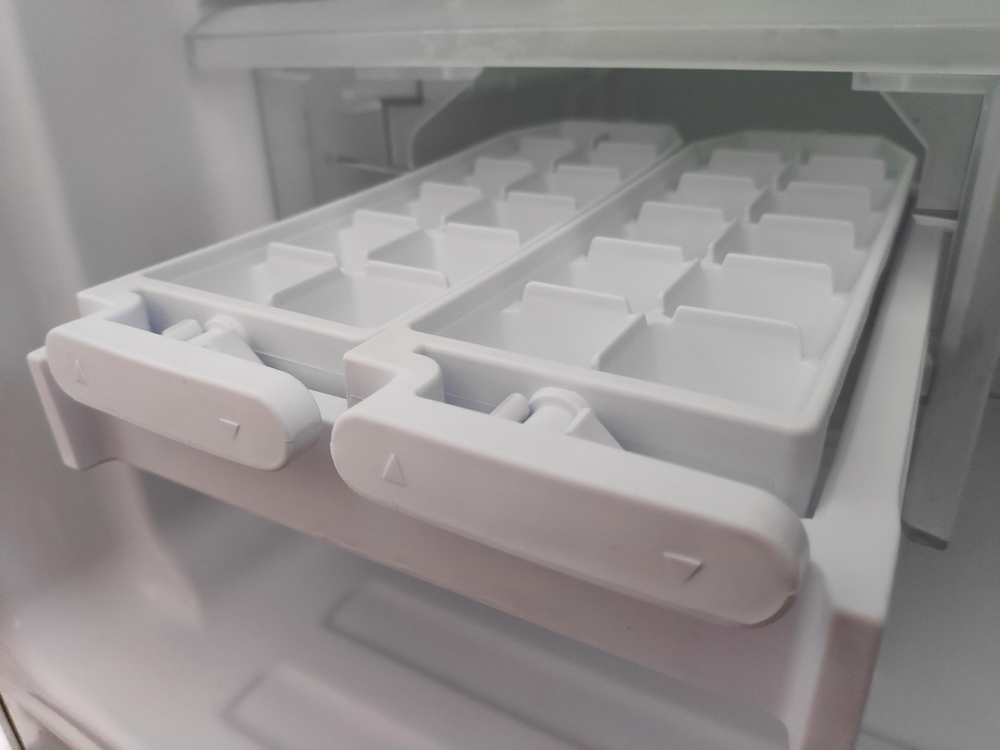
Freedom Appliance Airdrie hears the same complaint every winter: a fridge ice maker not working just when guests are coming over. The good news is that most ice maker faults trace back to a short list of causes. Water supply, freezer temperature, and a worn fill valve account for the majority of calls. This guide explains how an ice maker works, how to read the symptoms, and which checks are safe to try yourself. You will also learn when a technician should take over.
Why a Fridge Ice Maker Not Working Is Usually Fixable
An ice maker is a small machine inside your freezer. It has a water inlet, a mold, a heater, a motor, and a sensor arm or electronic eye. When one part fails, the whole cycle stops.
Because the parts work in a fixed order, the symptoms point to the failing step. No ice at all suggests a power or water problem. Small, hollow cubes suggest a low water flow. A frozen lump of ice suggests a fill valve that leaks or a freezer that runs too warm.
Most of these faults are repairable without replacing the fridge. A repair is usually the sensible first step when the fridge itself still cools well.
How an Ice Maker Makes a Batch of Ice
The cycle starts when the freezer drops to roughly -18°C (0°F). The fill valve opens for a few seconds and lets water into the mold. The mold chills until the water freezes solid.
Next, a small heater warms the mold for a moment. A motor-driven arm then sweeps the cubes into the bin. The arm or a sensor checks the bin level and pauses production when the bin is full.
Each batch takes about 90 to 120 minutes in most home models, according to common industry estimates. A full day should yield several batches. If your bin stays empty overnight, one of these steps is failing.
Symptoms, Likely Causes, and What We Do
Use the table below to match what you see with the most likely cause. It also shows the usual fix a technician applies.
| Symptom | Likely cause | What a technician does |
|---|---|---|
| No ice, no water in mold | Clogged or frozen water line | Thaws and clears the line, then tests flow |
| Tiny or hollow cubes | Weak water flow or a partly blocked filter | Replaces the filter and checks the fill valve |
| One solid block of ice | Leaking fill valve or warm freezer | Tests the valve and the freezer temperature |
| Ice maker stops mid-cycle | Failed heater or control module | Tests each part and replaces the faulty one |
| Cubes taste or smell odd | Old filter or stored food odours | Replaces the filter and cleans the bin |
| Maker is on but bin stays empty | Stuck sensor arm or jammed motor | Frees the arm and tests the motor |
If you see more than one symptom, list them all before you call. A clear description helps us bring the right part on the first visit.
Check the Freezer Temperature First
An ice maker needs a cold freezer to work. If the freezer runs above about -15°C (5°F), the water freezes slowly or not at all. Many people miss this, because the food still feels frozen.
Place a freezer thermometer on the middle shelf and wait about 24 hours. Read it at the same time each day. If it shows warmer than -15°C, the problem is bigger than the ice maker.
A warm freezer can come from a failing evaporator fan, a defrost fault, or a weak compressor. Our guide on why a fridge compressor runs constantly explains the warning signs. Fixing the cooling fault often brings the ice maker back on its own.
Water Supply Problems That Stop Ice
A fridge ice maker not working often points to the water side. The ice maker depends on a steady trickle of clean water. Three parts control it: the supply line, the filter, and the fill valve.
Frozen or Kinked Supply Lines
The supply line runs from your home water pipe to the back of the fridge. A kink from moving the fridge can restrict the flow. In cold Airdrie homes, a line near an exterior wall can also freeze.
Pull the fridge out gently and check the line for sharp bends. Make sure the shut-off valve is fully open. Never use a heat gun or open flame near the line or the fridge.
Old Water Filters
Most manufacturers suggest changing the filter about every six months. A clogged filter slows the flow, and the mold fills only part way. The result is thin, hollow cubes or no cubes at all.
Check your manual for the exact schedule. If you changed the filter recently and the problem remains, the fill valve is the next suspect.
A Weak Fill Valve
The fill valve is an electric solenoid that opens and closes the water path. Hard water from the Airdrie area can leave mineral deposits inside it. Over time, the valve opens only partly or fails to close.
A valve that will not close can drip into the mold and form a frozen block. A technician tests the valve with a meter and replaces it if it fails.
Simple Checks You Can Try Safely
Before you call about a fridge ice maker not working, a few quick steps can save time. Work through this short list in order.
- Confirm the ice maker switch or bail arm is in the on position.
- Lower the arm and lift it again to restart the cycle.
- Check the freezer temperature with a thermometer.
- Look for ice buildup around the fill tube at the back of the mold.
- Make sure the shut-off valve behind the fridge is open.
- Replace the water filter if it is older than six months.
Do not pry ice out with a knife or screwdriver. You can crack the mold or cut a wire. Unplug the fridge before you touch any part inside the freezer wall.
For tips on running your fridge efficiently, see the ENERGY STAR guide to refrigerators. If food stayed warm for too long during a fault, throw it out. When in doubt, discard it.
When to Call a Technician for a Fridge Ice Maker Not Working
Some faults need tools and training. Call for service if the maker stays off after the checks above. Call as well if water leaks onto the floor, or if the freezer is warm.
A technician can test the heater, motor, and control board in one visit. Many ice makers are modular, so a faulty unit can be replaced without touching the rest of the fridge.
You can read more about our process on the fridge repair service page. If the fridge is also warming food, our emergency fridge repair team can respond quickly. For help deciding between repair and replacement, see our repair versus replace guide.
An honest quote is given after assessment, and you approve any work before it starts.
Frequently Asked Questions
Why does my ice maker make ice and then stop?
A full bin, a stuck sensor arm, or a warm freezer can pause production. Lift the arm and clear any jammed cubes first. If it stops again, a failing motor or control board is likely.
How often should I replace the fridge water filter?
Most makers suggest about every six months. Homes with hard water may need it sooner. A slow water flow or odd-tasting ice is a good sign it is time.
Is it safe to keep using a fridge with a broken ice maker?
Yes, if the fridge cools normally. Turn the ice maker off at the switch so it does not leak or run dry. Then book a visit when it suits you.
Can I fix a fridge ice maker not working by resetting it?
Sometimes. Many models restart after you cycle the arm or unplug the fridge for five minutes. If the fault returns, the cause is mechanical or electrical and needs a technician.
Contact Freedom Appliance Airdrie
If your ice maker still refuses to produce, we are ready to help. Call us at (403) 889-6068 to book a visit. Our technicians serve Airdrie and the surrounding area.
