
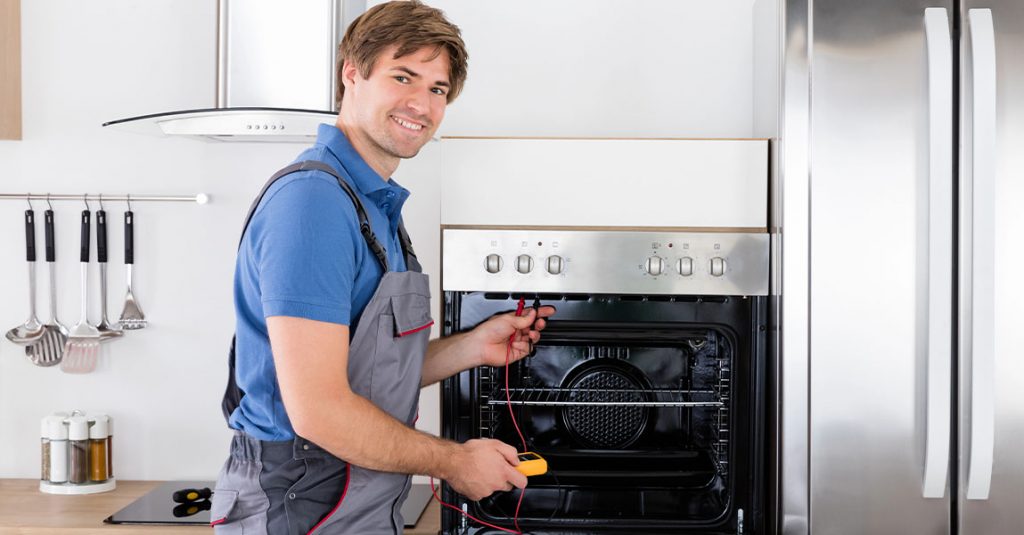
Freedom Appliance Airdrie often meets homeowners who have run into oven self-clean problems at the worst moment, such as the night before a family dinner. The cycle starts, then stops. The door locks and will not open. Or the kitchen fills with smoke and an acrid smell. These faults have clear causes, and many are simple to avoid. This guide explains what happens inside your oven during a self-clean, why the cycle fails, and which fixes are safe to try. It also shows when a technician should step in.
What Happens During a Self-Clean Cycle
A self-cleaning oven turns itself into a very hot furnace. The cycle heats the cavity to roughly 460 to 500°C (about 860 to 930°F) for two to four hours, according to common manufacturer guidance. Food soil burns to a light ash that you wipe away afterward.
To keep you safe, the oven locks the door once the temperature climbs. A small motor or solenoid drives the latch. A thermal fuse and temperature sensor watch the heat and shut things off if it climbs too high.
Because so many parts must cooperate, oven self-clean problems often start with a small component. A weak latch or a tired sensor can stop the whole cycle.
Common Oven Self-Clean Problems and Their Causes
Most faults fall into a few categories. Matching the symptom to the likely cause saves time and avoids needless part swaps.
| Symptom | Likely cause | What a technician does |
|---|---|---|
| Cycle will not start | Door not latching, or a control fault | Tests the latch switch and the control board |
| Door stays locked after the cycle | Latch motor stuck, or oven still hot | Waits for cooling, then tests the lock motor |
| Cycle stops partway through | Thermal fuse tripped, or a sensor fault | Tests the fuse and sensor with a meter |
| Oven will not reach cleaning heat | Weak bake element or igniter | Tests the heating parts and calibration |
| Heavy smoke and odour | Heavy grease or spills left inside | Advises on pre-cleaning, checks the vents |
| Error code flashes, such as F1 or F2 | Control or sensor fault | Reads the code and tests the related part |
If your oven shows a code, write it down before you reset anything. The code tells us which part to test first.
Why the Door Locks and Will Not Open
A locked door after a cycle worries many people. In most cases, nothing is wrong yet. The oven keeps the door locked until the cavity cools below a safe temperature. This can take an hour or more after the cycle ends.
Wait at least an hour and check the display. If the lock light is still on, wait another 30 minutes. Do not force the door or pull on the handle. You can bend the latch or break the glass.
If the door stays locked after the oven has cooled fully, the lock motor or the latch switch has probably failed. This is a job for a technician. The parts are small, but they sit behind the control panel.
Why the Cycle Stops Partway Through
A cycle that quits midway usually points to a safety shutoff. The thermal fuse is a one-time device that blows when the oven gets too hot. It protects the wiring and the control board.
A fuse rarely fails on its own. Something usually caused it to trip, such as a sensor reading wrong or a bake element stuck on. Replacing only the fuse treats the symptom and leaves the cause. A good repair tests the whole chain.
Our article on signs your oven temperature sensor is starting to fail lists the warning signs. Slow preheating and uneven baking often appear weeks before the cycle fails.
Heating Element and Igniter Issues
The bake element or gas igniter has to reach full heat for a self-clean. If it is weak, the oven may never hit the cleaning temperature, and the control may abort the cycle.
Look at our guide to oven heating element failure signs to see what a weak element looks like. Gas ovens have a similar guide for igniters.
How to Prepare Your Oven and Prevent Oven Self-Clean Problems
Many oven self-clean problems come from poor preparation, not from broken parts. A few minutes of prep makes the cycle smoother and safer.
- Remove the racks, pans, and any foil or mats.
- Wipe up loose crumbs and thick grease with a damp cloth.
- Open a window and run the range hood fan.
- Keep pets, especially birds, out of the kitchen and away from the fumes.
- Do not use commercial oven cleaner before a self-clean cycle.
- Stay home while the cycle runs.
Birds are especially sensitive to the fumes from heated non-stick coatings. Move them to a different room, ideally with a window open. People with breathing problems should also stay out of the kitchen.
Safety Notes Worth Knowing
High heat produces fumes, and any fuel-burning appliance can produce carbon monoxide if it is faulty. The EPA overview of carbon monoxide explains the risks and the importance of working alarms.
If you smell gas, leave the home and call the gas utility from outside. Do not try to run a self-clean on a gas oven that smells of gas. Smoke that does not clear, or flames inside the cavity, also call for stopping the cycle.
If a fire starts inside the oven, keep the door shut and turn the oven off. Do not open the door to look. Call the fire department if the flames spread.
Self-Clean Versus Steam Clean and Manual Cleaning
Not every oven needs the full high-heat cycle. Many modern ovens also offer a steam clean option. It uses a small amount of water and a lower temperature, usually for 20 to 30 minutes.
Steam clean suits light soil and regular upkeep. The full self-clean suits heavy baked-on grime, but it should be used sparingly. The extreme heat is hard on the door seal, the latch, and the control board.
A sensible routine is a quick wipe after spills, a steam clean every month or two, and a full self-clean only a couple of times a year. Less heat on the parts means fewer failures.
When to Call a Technician
Persistent oven self-clean problems deserve a visit. Stop and book one if any of these occur. Repeated error codes. A door that stays locked after cooling. A cycle that trips the breaker. Smoke that returns even after pre-cleaning.
Our team can test the latch, fuse, sensor, and heating parts in one visit. You can learn about the repairs we handle on our oven repair page. If the oven fails completely, our emergency oven repair service can help. An honest quote is given after assessment, and you approve the work before it starts.
Frequently Asked Questions
Is it normal for an oven to smell during self-clean?
Yes, a burning smell is normal because food soil is turning to ash. Ventilate the room and wipe loose spills first. A strong chemical smell or heavy smoke is not normal and needs attention.
Can a self-clean cycle break my oven?
It can stress parts that were already weak. Latches, sensors, and fuses often fail after a cycle because of the heat. That timing makes it seem as if the cycle caused the fault.
How long should I wait before opening the door?
Wait until the lock light turns off, usually 60 to 90 minutes after the cycle ends. Forcing the door can bend the latch. If it stays locked after the oven is cool, call for service.
Should I leave the racks in during a self-clean?
No. Most manuals say to remove them. The high heat dulls the finish and can make the racks stick on their guides.
Contact Freedom Appliance Airdrie
If your oven keeps stalling during self-clean, we can diagnose it. Call us at (403) 889-6068 to book a visit. Our technicians serve Airdrie and the surrounding area.
