
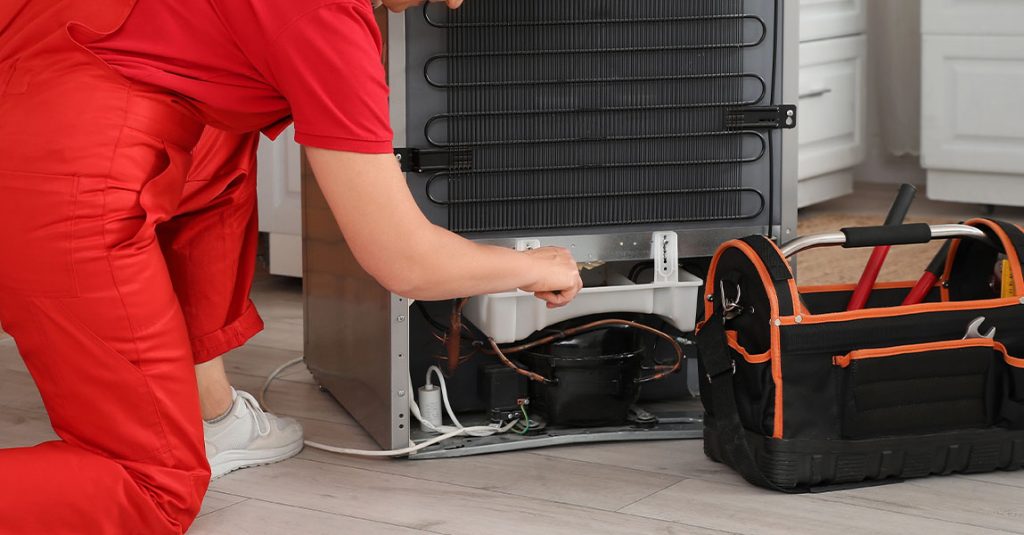
When a refrigerator keeps tripping the kitchen breaker, it becomes more than just a hassle. It disrupts food storage, daily routines, and possibly the electrical system itself. We often hear from homeowners who face this issue and feel unsure where to begin. This guide walks through what might cause the breaker to trip, what to inspect step-by-step, and how to tell when to call for help. Our goal is to make the situation easier to understand and manage.
Start by Ruling Out a Shared Circuit Problem
Some kitchens still use shared circuits for multiple appliances. That means your refrigerator may be competing for power with a microwave, toaster, or dishwasher. As a result, the breaker might trip when several appliances run at once. This isn’t necessarily a fridge issue.
We recommend unplugging other items on the same circuit. Then, reset the breaker and plug in the refrigerator alone. If it runs fine for several hours or days, shared load was likely the problem. However, if it trips again while the fridge is the only device on that line, then the cause lies with the unit or its wiring.
If circuit overload isn’t the issue, it might be time to consider an expert in appliance repair in Airdrie for further inspection. Safety matters most when working with electrical appliances.
Check the Fridge Power Cord and Plug for Damage
Next, unplug the fridge and examine the power cord closely. Look for burn marks, melted plastic, or kinks near the plug. Sometimes, years of being pushed and pulled near the wall can damage the cord, especially if it’s trapped behind heavy appliances.
Worn or cracked cords pose a fire risk and may short when plugged in. That short can easily trip your breaker. Likewise, inspect the wall outlet itself. If the plug fits loosely or sparks when connecting, the outlet could be the problem. In that case, the fix may involve replacing the outlet rather than repairing the fridge.
This step is simple, but it’s often overlooked. Before testing or replacing parts, we always check the power source. If it seems unsafe to touch or test, it’s best to stop and schedule fridge repair in Airdrie for a safe inspection.
Look for Internal Short Circuits or Ground Faults
Inside the refrigerator, a ground fault or short can easily trip the kitchen breaker. These faults happen when electricity strays from its intended path. In a fridge, that might come from a failed component like the defrost heater, evaporator fan, or compressor.
One common clue is hearing the fridge click or hum just before the breaker flips. This suggests the fault occurs when the compressor tries to start. Another sign might be a breaker that trips at random times during the cooling cycle. When these symptoms appear, unplug the unit and wait for it to fully power down before continuing.
We don’t suggest trying to test internal parts without the right tools. Instead, note any patterns or sounds before each breaker trip. That information helps narrow down which part might be at fault when working with technicians.
Clean Dust from the Compressor and Rear Coils
Dust buildup around the compressor and rear coils can also cause problems. While it usually leads to cooling issues, in some cases, it makes the compressor overheat. That heat may trigger safety circuits or trip a breaker if the motor draws too much current while struggling to run.
To clean these areas safely, unplug the refrigerator. Then move it slightly away from the wall. Use a vacuum with a nozzle or soft brush to remove debris. Avoid pressing hard or poking any part of the system. Most dust collects around the bottom back section.
After cleaning, plug the fridge back in and watch for signs of overheating. If the breaker trips again soon after, the compressor may already be stressed and need replacement. When that’s the case, a licensed technician should handle the next steps.
For long-term performance and peace of mind, contact Freedom Appliances if you’re unsure whether the unit is still safe to run.
Test the GFCI or AFCI Kitchen Breaker Type
Some modern homes use GFCI or AFCI breakers in the kitchen for safety. These breakers detect small leaks or arcs in electrical current and trip to prevent shock or fire. However, certain older refrigerators or those with specific compressor designs can accidentally trigger them even when nothing is wrong.
If your breaker has a “Test” and “Reset” button, it’s likely GFCI or AFCI. Try plugging the fridge into a regular outlet on another circuit, just temporarily. If it runs without issue there, the breaker type may be incompatible with that appliance.
This doesn’t mean your fridge is broken. It might just need a dedicated circuit with a standard breaker, installed by an electrician. In these cases, the breaker’s safety feature is working correctly, but it’s sensitive to the fridge’s internal startup behavior.
We’ve seen this happen often in newer homes with upgraded panels and older fridge models. Knowing the breaker type makes a big difference when troubleshooting.
Understand What Happens During Startup Surge
When the refrigerator starts up, it draws more power than it does while running. This power surge is normal, but if something slows the motor or fan, it may pull more current than usual. That extra draw sometimes trips the breaker, especially if it’s already close to its capacity.
Startup surges can be made worse by dirty fan blades, worn compressor bearings, or failing relays. These mechanical issues aren’t always loud or obvious. However, if the breaker only trips when the fridge first kicks on, this is a likely cause.
To spot this, listen to when the fridge turns on. Then watch how quickly the breaker flips. If it happens within seconds of the hum or click, the startup load is likely too high. A technician can test this with meters that show how much current flows during those first moments.
We often advise homeowners not to delay help when this pattern appears. Every failed start adds wear to the system.
When Circuit Load and Age Combine
Older homes may have wiring that isn’t suited for today’s refrigerators. Over time, insulation breaks down, and circuits lose their ability to handle brief surges. When this combines with a fridge nearing the end of its life, even small issues trip the breaker often.
We’ve seen cases where the fridge seems fine, but a slight change in temperature setting or humidity triggers the fault. In these homes, everything works on the edge of what’s allowed. The only long-term fix may be rewiring or replacing the circuit while updating the fridge itself.
We don’t recommend replacing parts over and over if the wiring itself is too weak. Instead, assess whether the home’s electrical setup still meets your kitchen’s current needs.
This situation is more common than most people realize. It’s also why we always ask questions about home age, outlet history, and breaker type before testing the fridge.
FAQs
Why does my fridge only trip the breaker at night?
That could mean a defrost heater is shorting out during its scheduled cycle. Many fridges run defrost overnight.
Can a new fridge still trip a breaker?
Yes. If the circuit is too weak or the breaker is too sensitive, even a new unit may cause problems.
Should I reset the breaker every time it trips?
No. If it trips more than once, find the root cause. Constant resets mask problems and risk damage.
Is it safe to use an extension cord with the fridge?
No. Extension cords can’t handle the power load and might cause more tripping or fire hazards.
Do I need to replace my fridge if it trips the breaker?
Not always. The issue could be wiring, the outlet, or even just a faulty relay inside the fridge.
